
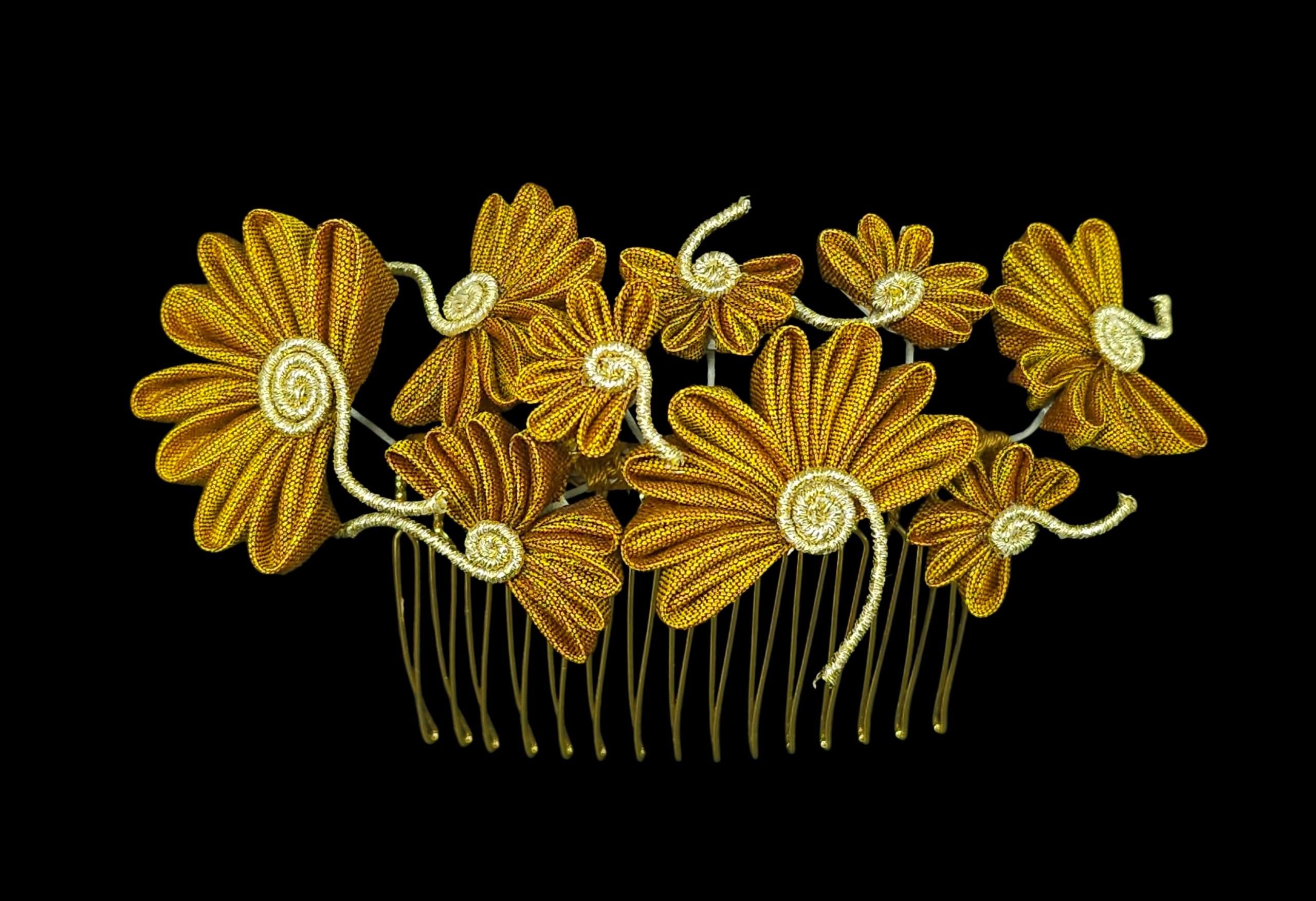
The International Tsumami Association was created to help promote and teach the art of tsumami zaiku. Tsumami zaiku, which consists of creating kanzashi using small folded squares of cloth, has been practiced for hundreds of years and is a national handicraft of Japan.
I began learning, by examining tsumami kanzashi, about 10 years ago. The craft drew me because of the ability to use every scrap of fabric. Simply discarding any scrap of fabric was something that I was hesitant to do. Textiles all take time to create especially Japanese kimono fabrics, that were a culmination of dozens of artisans with centuries of cumulative experience all working together.
The ginkgo tsumami kanzashi shown above was created out of antique meisen silk. The kimono was stained, moth eaten and dry rotten in places but there was usable silk. These small pieces were cut and folded into ginkgo and they now have a new life.
As the years went by I learned that the Japanese have a saying for the regret or "shame" of having to throw away something that has life or use left. This term, Mottainai, has become my mantra. In fact, I feel that my entire life has been shaped by this theme. I spent many of my younger years searching for new uses for scraps. Pumpkin seeds became necklaces, which I still own decades later. Milkweed pod silk became weaving experiments. Dirt became paint.
People I show my kanzashi to were fascinated with the process. At shows customers would have to touch the flowers (yes! It is ok!) because they just couldn't understand how it was created. Their brain was trying to determine what the object was, how it was made and with what materials. If I was in Japan, this object would be commonplace. However, in the USA this item was an oddity, nearly an impossibility.
I always said no if I was asked to teach this technique. This was because I was not formally trained. It was not my place. There were already a number of imitation artforms (like the gross-grain ribbon art). My items were modeled off of tsumami zaiku but I did not feel that they were truly tsumami zaiku.
In 2022, I stumbled across the ITA and I learned that they had opened up their teaching program online. I jumped at the chance to become a certified teacher and was certified about a year later.
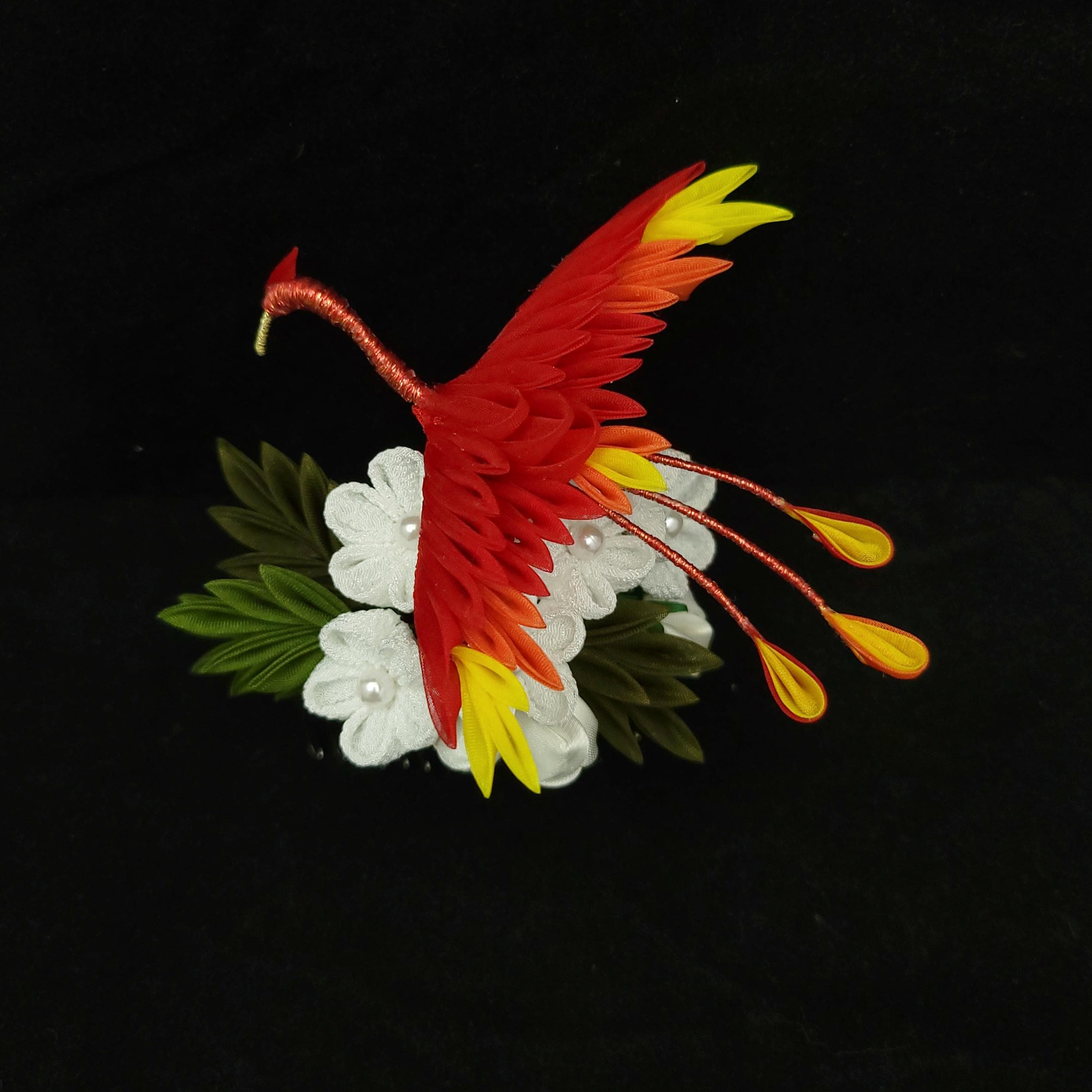
The kanzashi (seen below) was a self-designed "final exam" kanzashi that I created using all the techniques I learned from the ITA. The white buds were created using fabric from my wedding dress.
If you are also interested in learning tsumami zaiku from the ITA, it is now offering 30% off the cost of the 3-course series until the end of the month. This course will provide you with all the knowledge on how to create your own tsumami zaiku.
If you only wish to admire kanzashi then please consider becoming a member of the ITA. Membership fees help to promote and support this amazing art form.
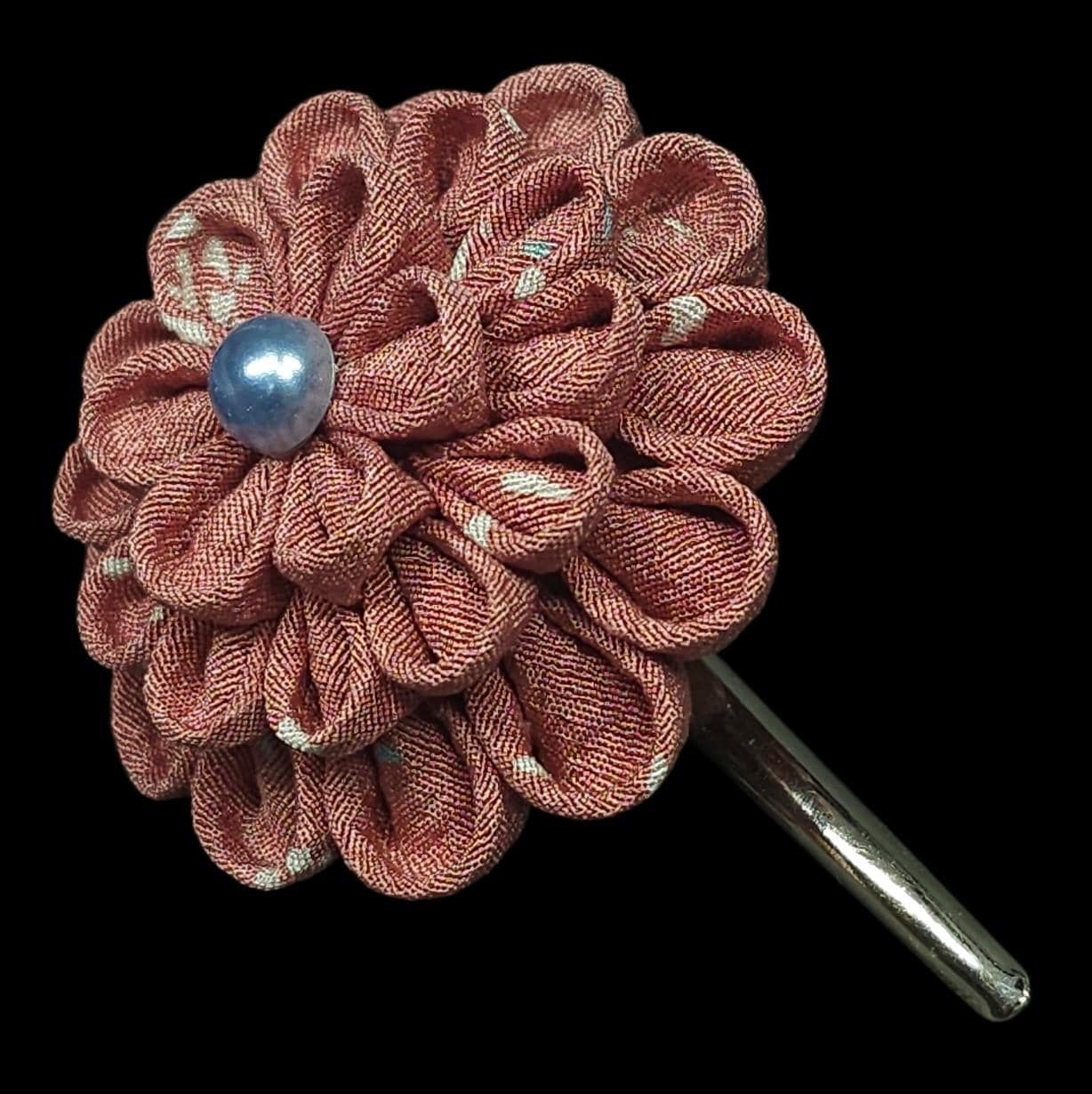
Above: Kiku created from vintage kimono silk chirimen
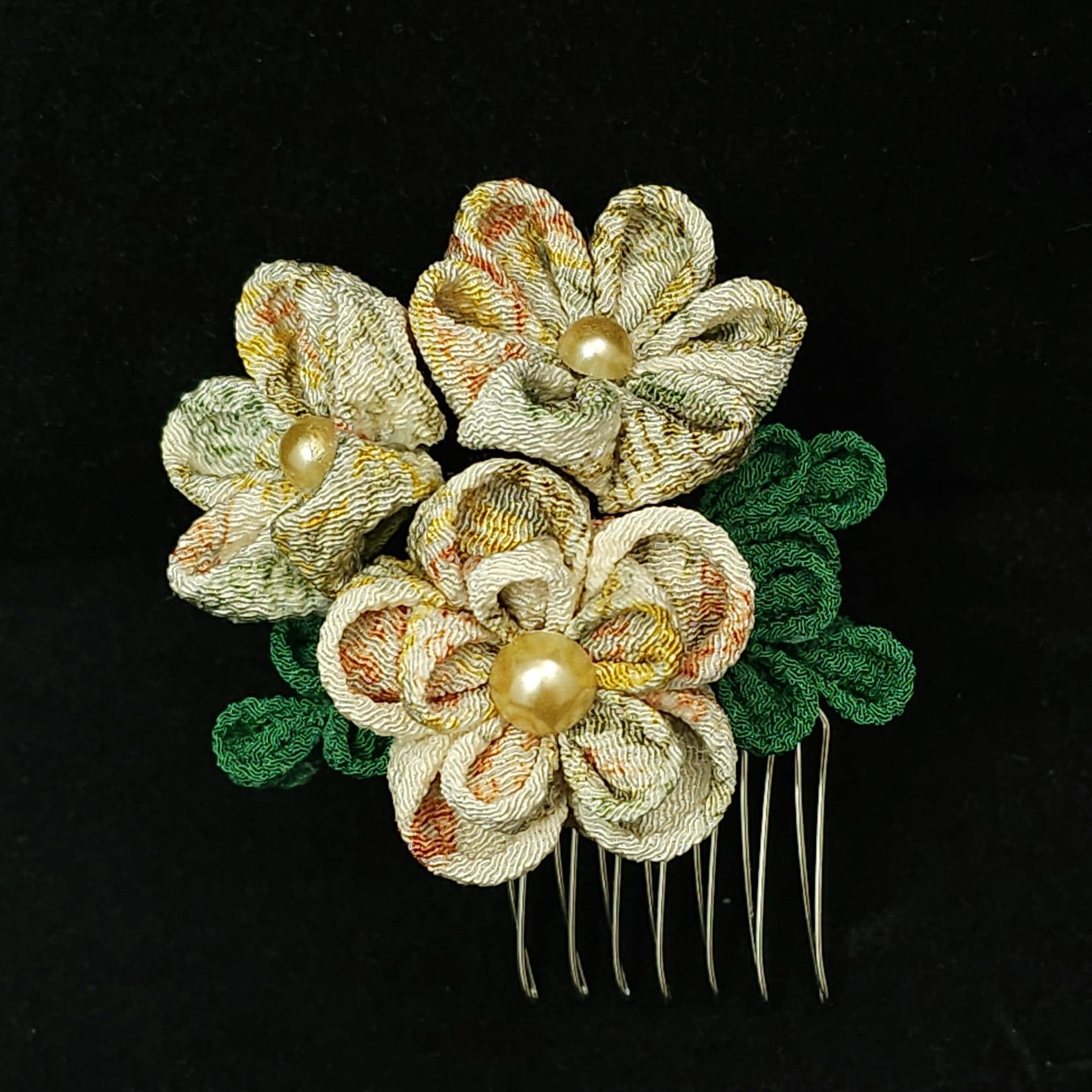
Above: tsumami kanzashi created using antique kimono silk chirimen
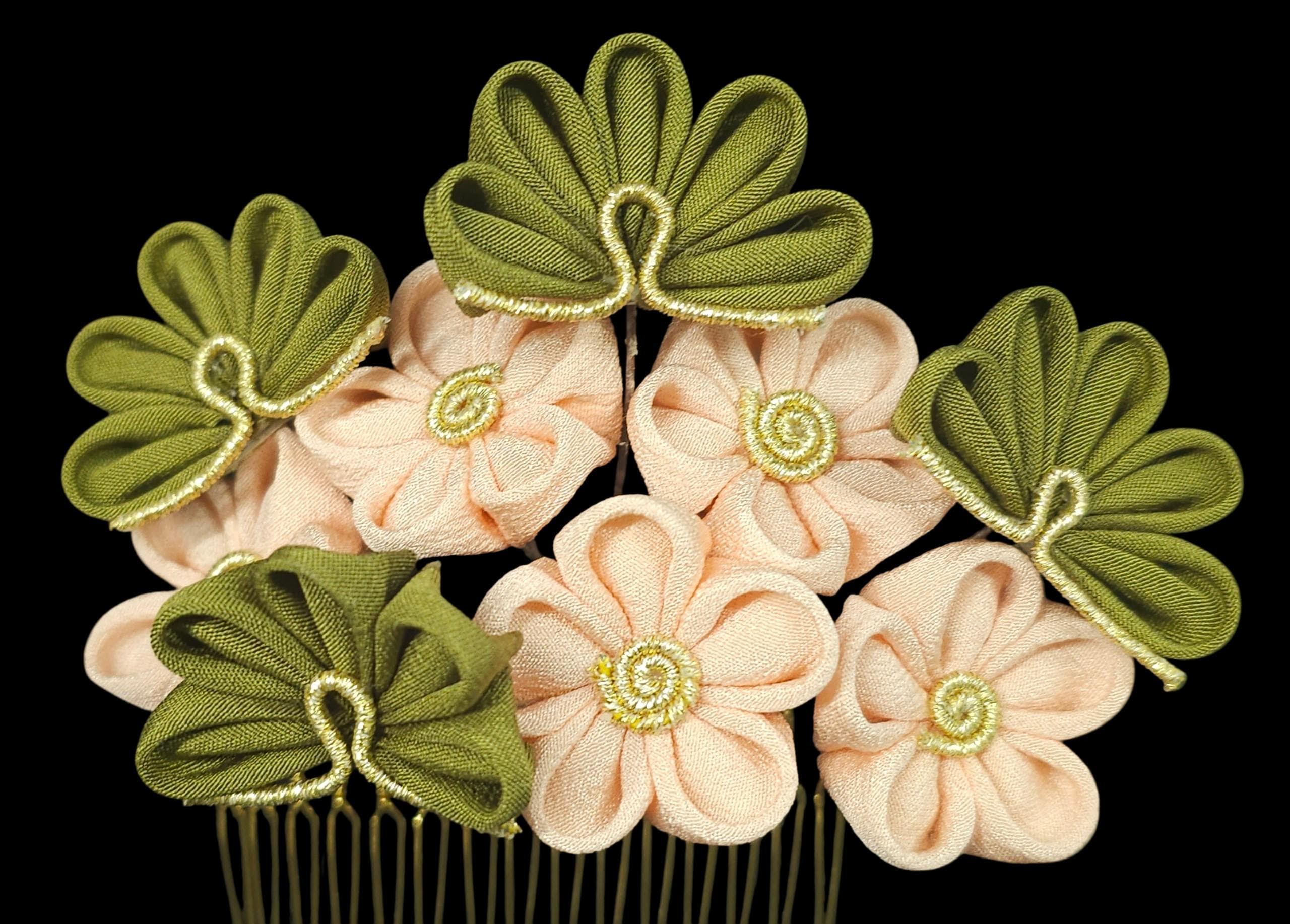
Above: Plum and Pink kanzashi created using vintage and antique kimono linings.